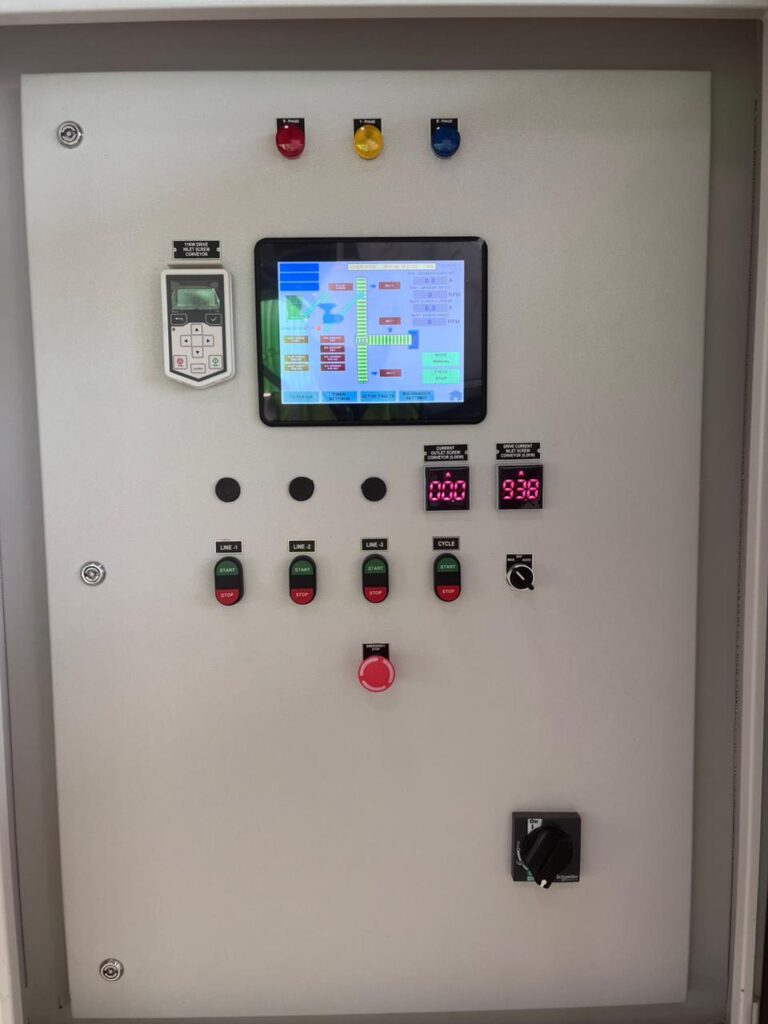
Bridge the gap between operators and machines with our intuitive HMI panels. Enable real-time monitoring, control, and data visualization. Get a quote from Global Technologies Dombivli, District-Thane
Human-Machine Interface (HMI) Panel
A Human-Machine Interface (HMI) Panel is the vital communication portal between your personnel and your industrial processes. It translates complex machine data into clear, intuitive visualizations—including graphics, schematics, and dashboards—allowing operators to monitor performance in real-time, issue commands, and respond to alarms. We provide HMI solutions that enhance operational awareness, simplify troubleshooting, and improve overall efficiency, from simple button-replacement screens to advanced multi-touch displays.
Core Functions of an HMI Panel
- Visualization: Provides a dynamic, graphical representation of the process, machine status, and production data.
- Operator Control: Allows operators to start/stop processes, adjust setpoints, and manually override automated sequences.
- Alarm Management: Presents real-time alerts and notifications for faults, warnings, and process deviations, often with historical logging.
- Data Reporting: Displays key performance indicators (KPIs), production counts, and efficiency metrics; can generate reports.
Key Features of Our HMI Solutions
- Touchscreen Displays: Robust, industrial-grade touchscreens (resistive or capacitive) in various sizes for clear interaction.
- Intuitive Software: Customized screens designed with the operator in mind, following user-centered design principles for ease of use.
- Connectivity: Seamless integration with all major PLC brands and support for industrial communication protocols.
- Rugged Design: Built to operate reliably in environments with dust, moisture, vibrations, and extreme temperatures.
Benefits for Your Operation
- Improved Operator Efficiency: Drastically reduces training time and enables faster, more informed decision-making.
- Reduced Downtime: Quick identification and diagnosis of issues allow for faster resolution and less production loss.
- Enhanced Process Transparency: Provides clear insight into machine status and production metrics, enabling continuous improvement.
- Flexibility: Software-based interfaces can be easily updated and modified as processes change, unlike hard-wired control stations.
Applications
- Machine Control Stations on Factory Floors
- Process Control Rooms in Chemical or Food Plants
- Monitoring of Packing and Palletizing Systems
- Interface for Building Management Systems (BMS)
- Remote Telemetry and Mobile Equipment