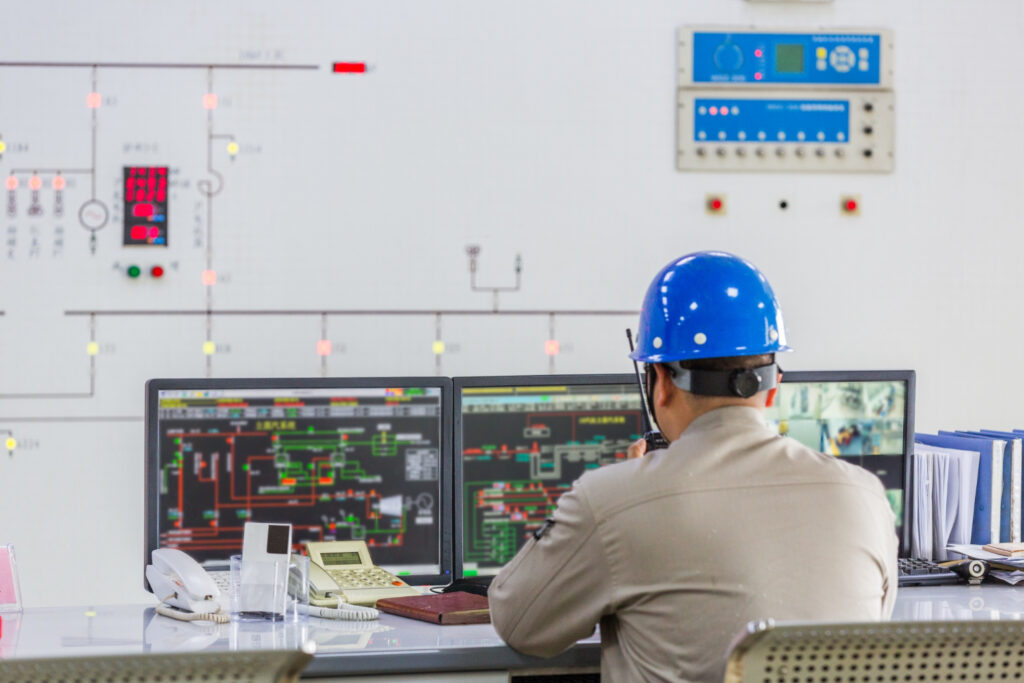
The Main Distribution Panel (MDP) acts as the central nervous system of your electrical network, receiving incoming power from the utility transformer or generator and distributing it to all subordinate panels and critical circuits throughout your facility. We design and build robust MDPs that guarantee operational reliability, ensure personnel safety, and provide the flexibility needed for future growth, all while adhering to your project’s budgetary constraints.
Core Functions of an MDP
- Primary Power Distribution: Serves as the main hub, distributing power to various sub-panels like PDPs, MCCs, and lighting panels.
- System Protection: Houses the main circuit breaker that provides overcurrent and short-circuit protection for the entire electrical system.
- Grounding & Bonding: Centralizes the grounding system, which is critical for safety and protecting equipment from voltage spikes.
- Load Management: Allows for organized metering and monitoring of the total power consumption of the facility.
Key Components We Integrate
- Main Circuit Breaker: A high-capacity air circuit breaker (ACB) or molded case circuit breaker (MCCB) serving as the primary system disconnect and protection.
- Busbar System: Precision-engineered copper or aluminum busbars designed to handle the full fault current of the system.
- Distribution Breakers: MCCBs to protect and control power feed to individual sub-panels and large loads.
- Metering & Monitoring: Options for energy meters, power quality analyzers, and communication modules for smart grid integration.
- Robust Enclosure: Fabricated from high-grade steel, often with IP42 or higher protection rating for safety and durability.
Design Considerations We Manage
- Load Capacity & Future Expansion: We size the MDP to handle your current and anticipated future electrical loads.
- Short-Circuit Current Rating (SCCR): Critical engineering to ensure the panel can safely withstand and interrupt the available fault current.
- Selective Coordination: Designing protective device settings to isolate a fault to the smallest possible section, maintaining power to the rest of the facility.
- Space Constraints: Designing a layout that fits your available electrical room space while allowing for safe operation and maintenance.
Applications
- Commercial Buildings (Offices, Malls, Hospitals)
- Industrial Manufacturing Facilities
- Data Centers
- Large Residential Complexes
- Power Generation Plants & Substations